myglpbuddy.com

Muscle & movement

Muscle Loss on Ozempic: Why It Happens and How to Prevent It

By The My GLP Buddy Team · Medically reviewed by Dr. Matt K, MD · Updated June 2026
Woman taking a gentle walk outdoors
Here’s the honest truth nobody puts in the ads: some of the weight you lose on Ozempic can come from muscle, not just fat. Research in The Lancet found that, on average, 25 to 39 percent of the weight people lose on GLP-1 medications is lean muscle. The good news is that you have real control over this. With enough protein, a little strength training, and a steady pace of weight loss, most people can preserve well over 90 percent of their muscle while the fat comes off. This guide shows you exactly how.
We’ll cover why muscle loss happens, how much is actually at stake, why it matters more than you might think, and the simple plan that protects your strength, your shape, and your results.
What's in this guide
Why GLP-1s cause muscle loss • How much muscle you lose • Why it matters • The 4 ways to prevent it • A gentle starter routine • Signs you’re losing muscle • Can you rebuild it • FAQ

Why GLP-1s cause muscle loss

It’s not the drug attacking your muscle. It’s the rapid weight loss and the eating that comes with it. When you lose weight quickly on very little food, your body breaks down some muscle along with fat for fuel, especially if protein is low. A slowed appetite makes this worse, because protein is usually the first thing people under-eat.
As Cleveland Clinic explains, this is why protein and strength training are the two things to get right from the start. Without them, your body has no reason to hold onto muscle it thinks it doesn’t need.

How much muscle do you actually lose?

More than most people expect. A 2024 analysis in The Lancet Diabetes and Endocrinology found that, on average, 25 to 39 percent of the total weight lost on GLP-1 medications is muscle, and some studies put the figure as high as 40 percent. GoodRx and U.S. News both report similar ranges.
That’s the figure for people who do nothing to protect it. With protein and resistance training, the picture changes dramatically: studies suggest you can hold onto more than 90 percent of your lean mass while still losing fat. The number isn’t your destiny. It’s a warning you can act on.

Why protecting your muscle matters

Muscle is not just about looking toned. It’s metabolically active tissue, so losing it slows your metabolism, which makes weight loss harder and regain easier. It’s also what keeps you strong, steady on your feet, and functional as you age.
There’s a shape element too. A lot of what people call the gaunt or deflated look from rapid weight loss is lost muscle volume, not just fat. And because muscle helps you keep weight off long term, protecting it now is one of the best investments in staying at your new weight later.

The four ways to prevent muscle loss

1. Eat enough protein

This is the single most important lever. Aim for roughly 0.5 to 0.7 grams of protein per pound of body weight daily, often 80 to 110 grams, and spread it across 3 to 4 meals so your body can actually use it. Set your exact number with our free calculator and protein guide, and fill your plate from our ranked high-protein foods and snacks.

2. Do some strength training

Resistance training is the signal that tells your body to keep its muscle. You don’t need a gym or heavy weights. Aim for two to three short sessions a week working the major muscle groups, and gradually make them a little harder over time. A simple beginner routine is below.

3. Lose weight at a steady pace

Faster is not better. Losing more than about 1 percent of your body weight per week raises how much of that loss comes from muscle. Follow your provider’s dose schedule rather than rushing it, and let the weight come off gradually.

4. Eat enough overall

Crash-low eating starves your muscle as much as your fat. You still need real fuel, so eat by the clock even when appetite is low. Under-eating is one of the most common beginner mistakes, and it shows up as fatigue, hair loss, and lost strength.

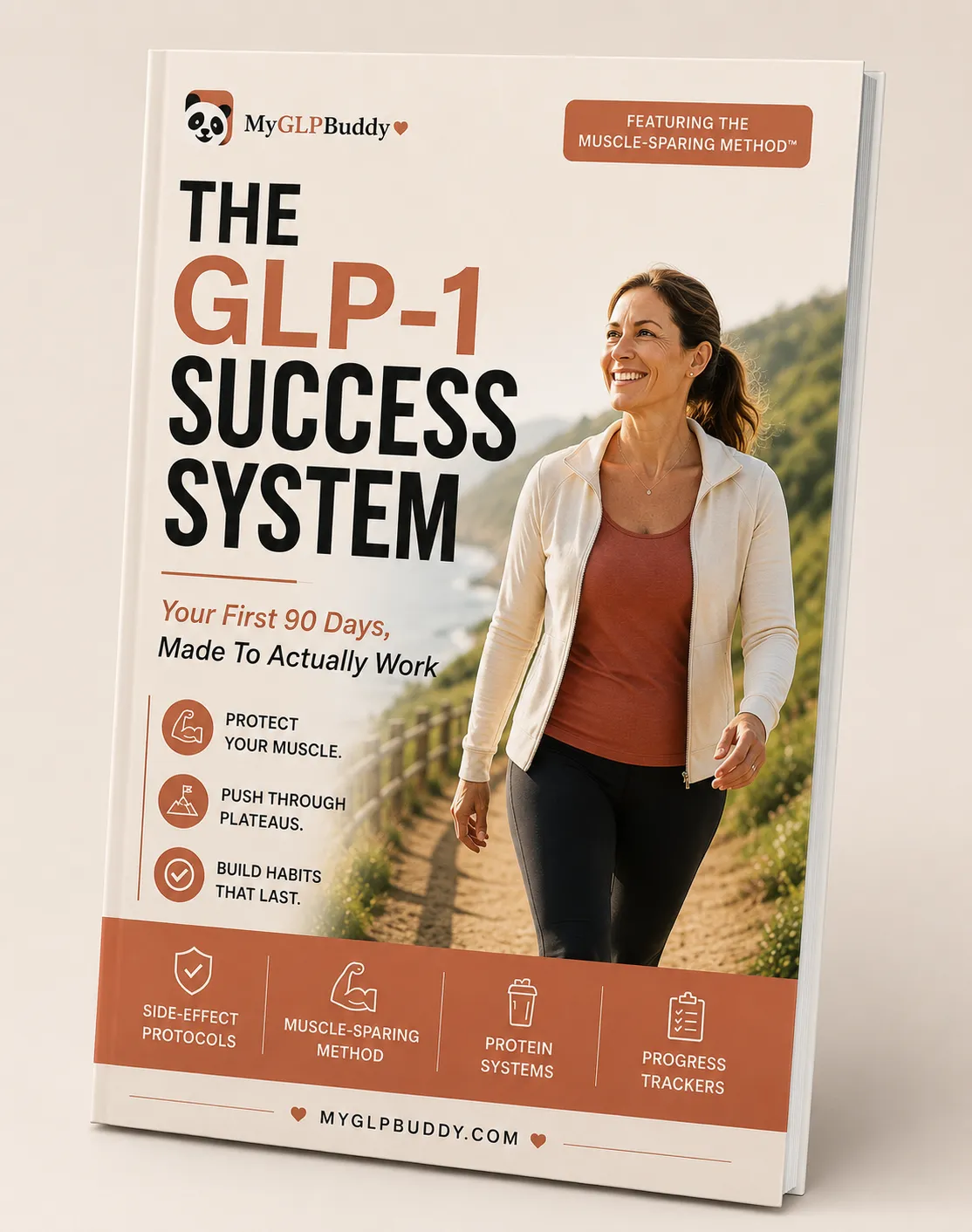
The complete muscle-sparing method

The GLP-1 Success System includes short, gentle strength routines and protein targets built for low-appetite days, so you lose fat and keep the muscle that holds your shape and strength.

A gentle beginner strength routine

You don’t need to be sore or exhausted to protect muscle. This takes about 10 minutes, uses just your body weight, and can be done at home two or three times a week. Move slowly, stop before failure, and add a rep or two as it gets easier.

1. Sit-to-stands (10 reps). Stand up from a sturdy chair without using your hands, then sit back down with control. The best lower-body move there is.

2. Wall or counter push-ups (10 reps). Hands on a wall or kitchen counter, lower your chest in and press back out. Gentle on the shoulders.

3. Glute bridges (12 reps). Lie on your back, knees bent, and lift your hips. Builds the glutes and lower back.

4. Standing rows with a band or bag (12 reps). Pull something toward you to work your back. A resistance band or even a heavy bag works.

5. Farmer’s carry (30 seconds). Hold something heavy in each hand and walk. Simple, and it builds full-body strength and grip.

Do that circuit once or twice through. For more low-energy options, see our gentle exercise on GLP-1 guide.

Signs you might be losing muscle

The scale won’t tell you, since it can’t separate fat from muscle. Watch instead for these signals:
  • You feel weaker, or everyday tasks like stairs and groceries feel harder.
  • Your energy is low and lingering, beyond the usual early fatigue.
  • You’re losing weight fast but look soft or deflated rather than toned.
  • Your strength in simple movements is dropping week to week.
If several of these ring true, it’s usually a sign to push protein up, add a little resistance work, and slow the pace. Persistent weakness is also worth raising with your provider.

Can you rebuild muscle on a GLP-1?

Yes. This is the hopeful part. Muscle responds to the same things on a GLP-1 as off it: enough protein and resistance training. You can absolutely maintain, and many people build, muscle while losing fat, especially if you were not training before. Your body is very willing to keep muscle when you give it a reason to.
So even if your first weeks were all about surviving side effects, it’s not too late. Start the protein and the gentle strength work now, and your body will respond.
A note: this article is educational and not medical advice. Talk to your doctor before starting a new exercise program, especially if you have heart, joint, or other health conditions, and ask a dietitian to tailor your protein target.

How to track muscle, not just the scale

The scale lumps fat and muscle together, so it’s a poor judge of whether you’re holding onto muscle. These signals tell you far more:

Strength progress. Track the reps on your strength moves. More reps over time means muscle is holding or growing, whatever the scale says.

How your clothes fit. Losing inches while your strength holds is the sweet spot, and it means the loss is mostly fat.

Progress photos. A monthly photo in the same light shows shape changes the scale completely hides.

Tape measurements. Waist, hips, arms, and thighs. A shrinking waist with steady limb measurements is a good sign.

A body-composition scan. A DEXA or InBody scan, if you have access, separates fat from muscle directly.

Pick two you’ll actually keep up with. Strength progress and how your clothes fit are the easiest and most telling.

Muscle-loss mistakes to avoid

A few common habits quietly cost people muscle. Each is easy to fix once you spot it.

1. Watching only the scale. It can’t separate fat from muscle, so a big drop can be hiding muscle loss. Track strength and inches too.

2. Doing only cardio. Long cardio burns calories but doesn’t tell your body to keep muscle. Resistance training does. If you only have time for one, choose strength.

3. Skimping on protein. The number-one cause of muscle loss on a GLP-1. Make it the first thing on every plate.

4. Rushing your dose up. Faster weight loss means more of it comes from muscle. Follow your provider’s schedule rather than pushing it.

5. Eating far too little. Crash-low intake starves muscle as much as fat. Eat enough, by the clock, even when appetite is gone. More in our beginner mistakes guide.
One reader lost weight fast but felt weak and looked drawn. She added a protein target and ten minutes of sit-to-stands and band rows three times a week. Two months later she was still losing fat, but felt strong and looked like herself again.

Frequently asked questions

On average, research suggests 25 to 39 percent of the weight lost on GLP-1s is muscle if you do nothing to protect it. With protein and strength training, you can preserve more than 90 percent of your lean mass.
Eat enough protein (around 0.5 to 0.7 grams per pound daily), do two to three short strength sessions a week, lose weight at a steady pace, and avoid crash-low eating.
Roughly 0.5 to 0.7 grams per pound of body weight per day, often 80 to 110 grams, spread across 3 to 4 meals. A calculator or dietitian can set your exact number.
No. Bodyweight moves, resistance bands, and light weights all work. The key is regular resistance and gradually making it a little harder, not lifting heavy.
Largely, yes. With enough protein and resistance training, you can maintain and often rebuild muscle while losing fat, even if your first weeks were rough.
Some of the deflated look from rapid weight loss is lost muscle volume. Protecting muscle with protein and strength work helps you keep a fuller, stronger shape.
GB

The My GLP Buddy Team

Medically reviewed by Dr. Matt K, MD. We write plain-language, protein-first guidance for people navigating GLP-1 medications, reviewed by a physician for accuracy. Support for the day-to-day, not a replacement for your own care team.

Keep reading

Woman taking a gentle walk outdoors
Protein

How much protein on a GLP-1

Woman taking a gentle walk outdoors
Protein

High-protein foods, ranked

Woman taking a gentle walk outdoors
Side effects

GLP-1 hair loss

Free download

Get the free GLP-1 grocery list

The protein-first foods that protect your muscle, plus gentle weekly tips for eating well on your medication. No spam.
Scroll to Top